
1920 Parker Rd Ste 120
Carrollton, TX 75010

Myopia Management in Carrollton: Is Atropine or Ortho-K Right for Your Child?
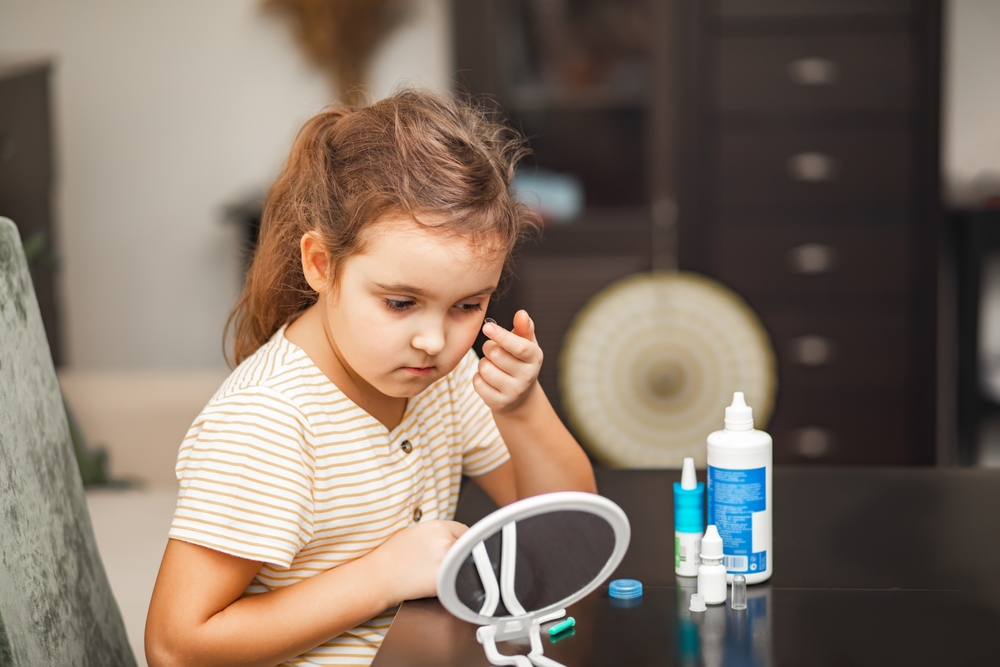
If your child’s nearsightedness seems to be getting stronger each year, updating their glasses prescription may not be the only option. Myopia management is designed to slow the progression of nearsightedness as children grow. At OmniVision Eye Care, we offer personalized myopia management in Carrollton, including low-dose atropine therapy and orthokeratology, commonly called Ortho-K.
Why Managing Childhood Myopia Is Important
Myopia causes distant objects to appear blurry while close-up vision is generally clearer. It often develops during childhood and may continue progressing into early adulthood. As the eye grows longer, the degree of nearsightedness can increase.
Rather than only correcting blurry vision with standard glasses or contacts, myopia management focuses on slowing that progression. For families in Carrollton, starting treatment early can give us more opportunity to manage changes in a child’s prescription over time.
How Does Ortho-K Work?
Ortho-K uses specially designed rigid contact lenses that are worn while your child sleeps. The lenses gently reshape the cornea overnight and are removed in the morning. This allows many patients to see clearly during the day without glasses or daytime contacts while also helping slow myopia progression. Ortho-K may be appealing for children who play sports, prefer not to wear glasses during the day, or can comfortably follow an overnight contact lens routine.
How Do Low-Dose Atropine Drops Work?
Low-dose atropine is another option for childhood myopia management in Carrollton. The eye drops are used as prescribed to help slow the progression of a child’s nearsightedness. Unlike Ortho-K, atropine does not reshape the cornea and does not replace glasses or contact lenses needed for clear vision. Atropine may be a practical choice for children who are not ready for contact lenses or whose individual needs make eye drop therapy a better fit.
Can Atropine and Ortho-K Be Combined?
In some cases, low-dose atropine and Ortho-K can be used together as part of a myopia management plan. Combining treatments may be considered when a child’s myopia continues to progress or when additional control is needed. The right approach depends on factors such as:
• Your child’s age and current prescription
• How quickly their myopia is progressing
• Eye health and corneal measurements
• Response to previous myopia management
• Comfort and readiness for Ortho-K lenses
• Ability to follow the recommended treatment routine
At OmniVision Eye Care, we evaluate each child individually before recommending atropine, Ortho-K, or a combination of both. Regular follow-up visits also allow us to monitor changes in myopia and adjust the treatment plan when needed.
Find the Right Myopia Management Option in Carrollton
Choosing between atropine and Ortho-K starts with understanding your child’s eyes, prescription, lifestyle, and rate of myopia progression. Our team can explain the differences between these options and recommend a treatment plan based on your child’s individual needs.
Schedule a pediatric eye exam with OmniVision Eye Care to find the right myopia management approach for your child. Contact our office in Carrollton, TX, by calling (972) 939-5367 to get started.

All Eye
Care Services

Keep
In Touch
© 2026 Omnivision Eye Care. All rights Reserved - Accessibility Statement - Privacy Policy - Sitemap
Powered by
