
1920 Parker Rd Ste 120
Carrollton, TX 75010

Why Myopia Management Needs More Than a New Prescription
When a child’s nearsightedness gets stronger, updating their glasses can restore clear distance vision. However, a stronger prescription does not necessarily address why myopia continues to progress. For children whose nearsightedness keeps increasing, myopia management takes a more proactive approach.
At OmniVision Eye Care in Carrollton, we provide personalized myopia management designed to slow the progression of childhood nearsightedness while helping children see clearly for school, sports, and everyday activities.
What Does a New Glasses Prescription Actually Do?
Myopia, or nearsightedness, makes distant objects look blurry while nearby objects generally remain clearer. Standard glasses correct that blur by helping light focus properly inside the eye.
If your child’s prescription changes, new lenses can make the classroom board or distant signs clear again. What ordinary single-vision glasses generally do not do is slow the underlying progression of myopia.
A child can therefore see perfectly well through new glasses while their nearsightedness continues becoming stronger.
Why Does Slowing Myopia Matter?
Myopia often begins during childhood and may progress as the eyes continue growing. Higher levels of myopia are associated with increased lifetime risks of certain eye conditions, including retinal detachment, glaucoma, cataracts, and myopic macular degeneration.
Myopia management focuses on reducing the rate of progression. It does not cure myopia or guarantee that a child’s prescription will stop changing completely.
For Carrollton families, the goal is to look beyond today’s prescription and consider how a child’s vision may change over the coming years.
What Does Myopia Management Involve?
The right approach depends on your child’s age, prescription, eye health, lifestyle, and rate of progression. During a myopia management evaluation, we may consider:
How quickly the prescription has changed between exams
Your child’s age and family history of myopia
Corneal shape and overall eye health
Readiness for contact lens wear
School, sports, and everyday visual demands
Ability to follow treatment and hygiene instructions consistently
These factors help us build a plan around the individual child rather than simply prescribing stronger glasses each year.
How Can Ortho-K Help?
OmniVision Eye Care offers Ortho-K for childhood myopia management in Carrollton. These customized rigid contact lenses are worn overnight and removed in the morning.
While your child sleeps, the lenses temporarily reshape the cornea so many patients can see clearly during the day without glasses or daytime contacts. Ortho-K may also help slow myopia progression.
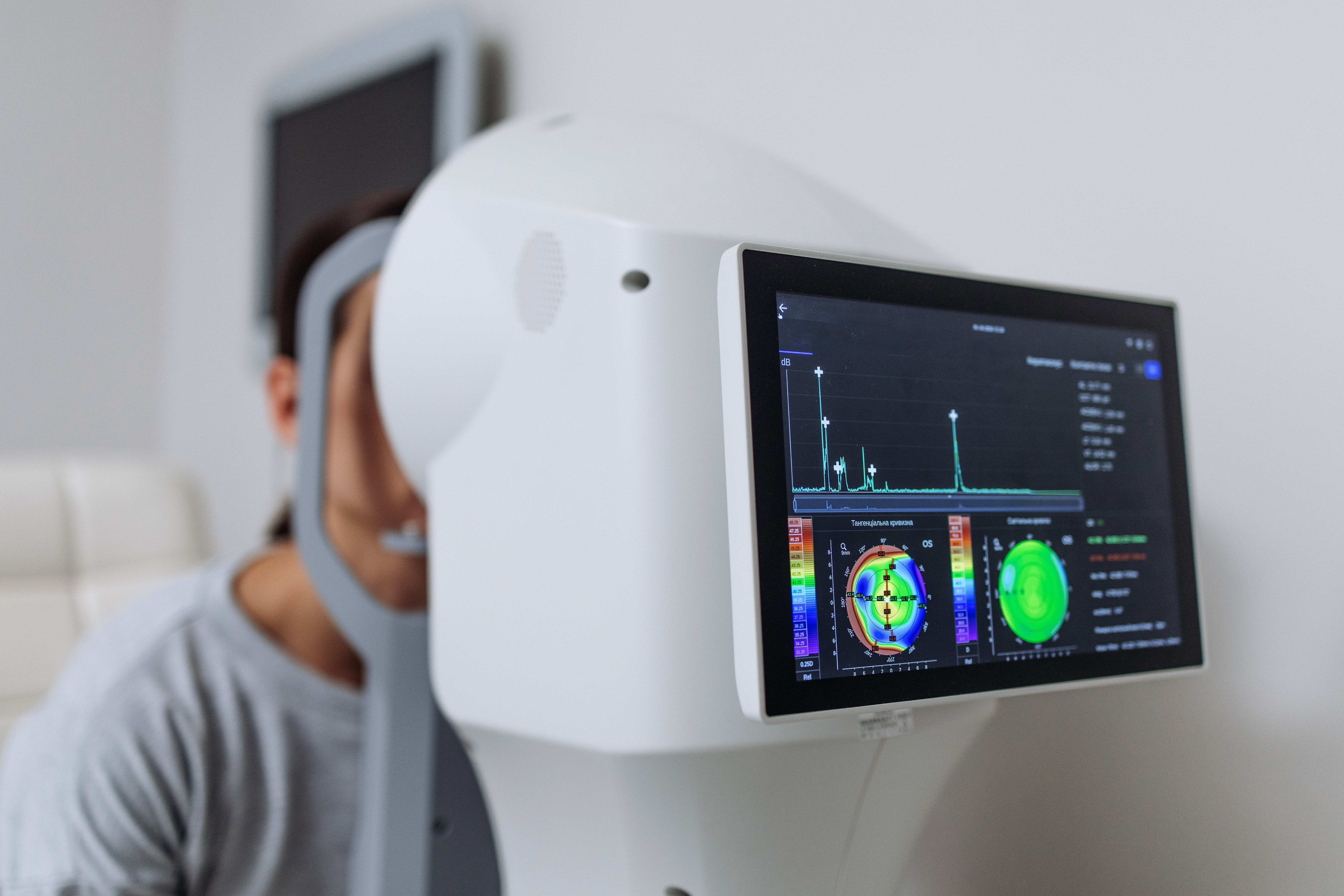
We use detailed corneal measurements and corneal topography when fitting Ortho-K lenses. Regular follow-ups allow us to monitor daytime vision, corneal health, lens fit, and changes in myopia.
Using Ortho-K specifically to slow myopia progression is considered off-label in the United States.
What About Low-Dose Atropine?
Low-dose atropine eye drops are another option we may consider for children with progressing myopia. The drops are generally used at home according to the prescribed schedule.
Atropine does not correct blurry distance vision, so children still need glasses or contact lenses for their prescription. Its purpose is to help slow progression.
Atropine for myopia control is also an off-label use in the United States. Follow-up visits help us monitor prescription changes, treatment response, and possible side effects such as light sensitivity or difficulty focusing at near.
Why Are Follow-Up Exams Part of Treatment?
Myopia management is an ongoing process. Clear vision does not necessarily mean progression has stopped.
Regular appointments allow us to compare prescriptions, evaluate eye health, review treatment consistency, and make adjustments when needed. Parents should also mention increased squinting, trouble seeing distant objects, contact lens discomfort, or other changes between visits.
If your child’s glasses prescription keeps getting stronger, contact OmniVision Eye Care at 1920 Parker Rd., Suite 120, Carrollton, TX 75010 by calling (972) 939-5367 to schedule a myopia management evaluation and discuss options for slowing their nearsightedness.

All Eye
Care Services

Keep
In Touch
© 2026 Omnivision Eye Care. All rights Reserved - Accessibility Statement - Privacy Policy - Sitemap
Powered by
